 General Liability Insurance
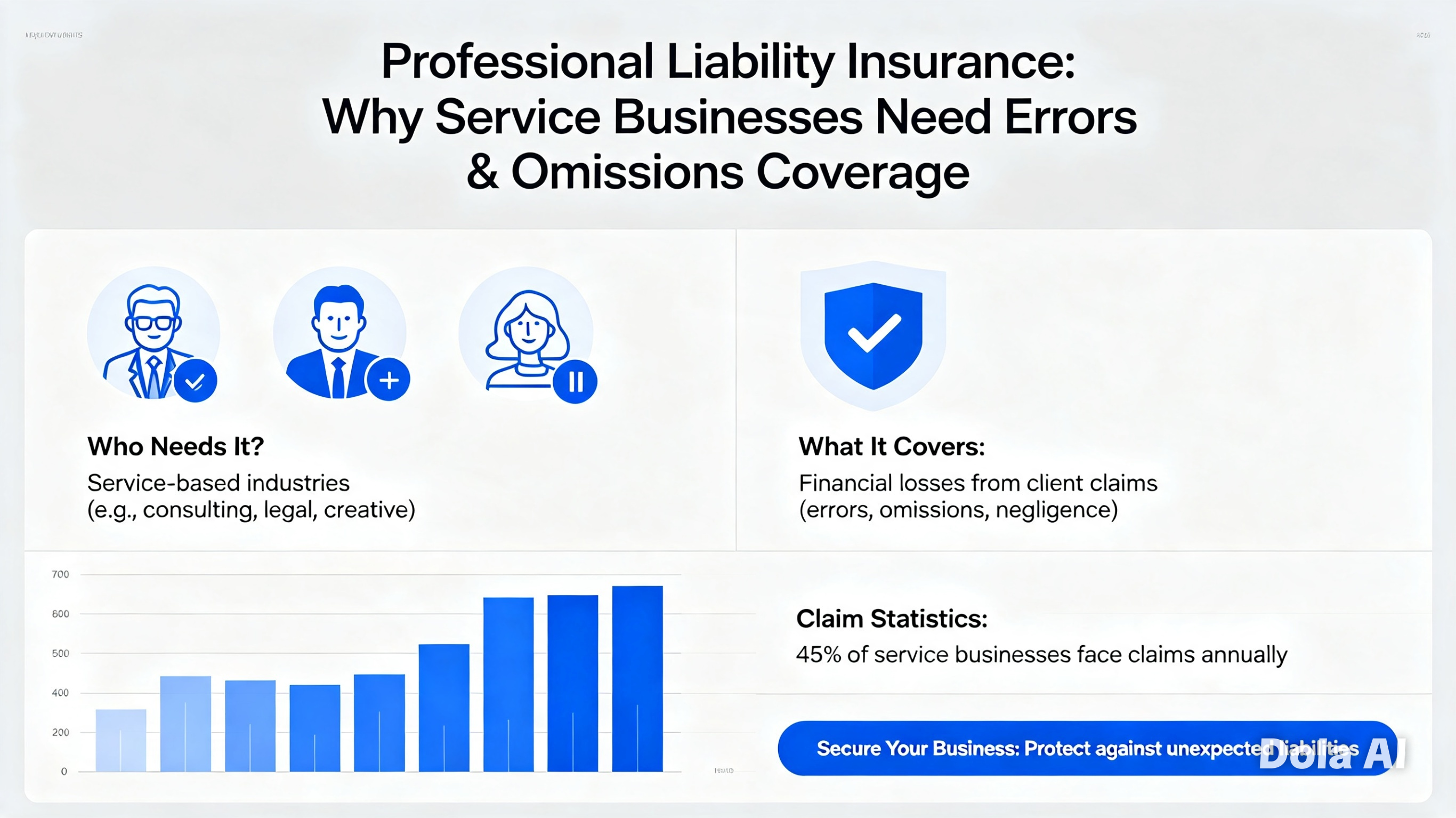
Professional Liability Insurance: Why Service Businesses Need Errors & Omissions Coverage
Professional Liability Insurance: Why Service Businesses Need Errors & Omissions Coverage
Providing professional services comes with responsibility. Even the most experienced professionals can make mistakes, overlook important details, or face claims from unhappy clients. A single lawsuit alleging negligence or professional error can result in significant legal expenses, settlements, and damage to your reputation.
Professional liability insurance, also known as Errors and Omissions (E&O) insurance, helps protect businesses and professionals from these financial risks.
What Is Professional Liability Insurance?
Professional liability insurance is designed to protect businesses that provide advice, expertise, or professional services. It covers claims that your work caused a client financial loss due to mistakes, negligence, omissions, or failure to deliver services as promised.
Unlike general liability insurance, which covers bodily injury and property damage, professional liability insurance focuses on financial losses related to professional services.
Coverage typically includes:
- Professional negligence
- Errors and omissions
- Legal defense costs
- Court judgments
- Settlements
- Missed deadlines
- Misrepresentation claims
What Does Professional Liability Insurance Typically Cover?
Professional Errors
Protects your business if a client claims you made a mistake that caused financial harm.
Example: An accountant files incorrect tax documents that result in penalties for a client.
Negligence Claims
Covers lawsuits alleging your services failed to meet accepted professional standards.
Example: A business consultant provides advice that allegedly causes a client's project to fail.
Missed Deadlines
Some policies cover claims resulting from missed deadlines or delayed project completion.
Legal Defense Costs
Even if you are not responsible, defending yourself in court can cost thousands of dollars. Most policies pay attorney fees and legal expenses.
Settlements and Judgments
If your business is found liable, the policy may pay covered settlements or court-awarded damages up to the policy limits.
What Isn't Covered?
Professional liability insurance generally does not cover:
- Bodily injury
- Property damage
- Employee injuries
- Criminal or fraudulent acts
- Intentional wrongdoing
- Cyberattacks (unless separately insured)
- Contract guarantees you voluntarily assume
Reading your policy carefully helps you understand coverage limitations.
Who Needs Professional Liability Insurance?
Any business that provides professional advice or specialized services should consider this coverage.
Examples include:
- Accountants
- Consultants
- Marketing agencies
- Architects
- Engineers
- Lawyers
- Insurance agents
- Financial advisors
- Human resources consultants
- IT consultants
- Software developers
- Graphic designers
- Real estate professionals
Even freelancers and independent contractors can benefit from professional liability insurance.
Professional Liability vs. General Liability
These policies protect against different risks.
Professional Liability InsuranceGeneral Liability InsuranceProfessional mistakesCustomer injuriesFinancial lossesProperty damageNegligence claimsSlip-and-fall accidentsBad adviceAdvertising injury
Many service businesses carry both policies for broader protection.
Claims-Made vs. Occurrence Policies
Professional liability insurance is usually written as a claims-made policy, meaning the policy must be active when both:
- The professional service was performed, and
- The claim is filed.
If you cancel coverage, you may need tail coverage (extended reporting period) to protect against future claims related to past work.
Understanding this distinction is essential before changing insurers.
How Much Does Professional Liability Insurance Cost?
Premiums vary depending on the profession and level of risk.
Many small businesses pay between $400 and $2,500 per year, although high-risk professions may pay considerably more.
Factors affecting cost include:
Industry
Medical professionals, architects, and engineers generally pay higher premiums than consultants or designers.
Annual Revenue
Higher revenue often increases potential claim exposure.
Coverage Limits
Greater protection comes with higher premiums.
Experience
Businesses with a long history of successful operations may qualify for lower rates.
Claims History
Previous lawsuits or insurance claims can increase premiums.
How to Choose the Right Policy
When comparing policies:
- Evaluate the financial risks of your professional services.
- Choose coverage limits that reflect your potential exposure.
- Understand whether defense costs are inside or outside policy limits.
- Verify whether subcontractors are covered.
- Review exclusions carefully before purchasing.
- Compare quotes from multiple insurers.
Tips to Reduce Insurance Costs
You may qualify for lower premiums by:
- Using written client contracts.
- Maintaining detailed project documentation.
- Following quality assurance procedures.
- Providing regular employee training.
- Reporting potential claims promptly.
- Bundling policies with the same insurer.
Frequently Asked Questions
Is professional liability insurance legally required?
Usually not, but many clients, licensing boards, and contracts require it before work begins.
Does it cover honest mistakes?
Yes. Most policies are specifically designed to protect against unintentional professional errors and omissions.
Does it cover legal fees?
Yes. Legal defense costs are generally included, even if the claim is ultimately dismissed.
Is professional liability insurance tax deductible?
In many countries, business insurance premiums may qualify as deductible business expenses. Consult a qualified tax professional for advice applicable to your situation.
The Bottom Line
Professional liability insurance is an essential safeguard for businesses that provide advice, expertise, or specialized services. Even a minor mistake or misunderstanding can lead to costly legal disputes and financial losses. By carrying the right Errors & Omissions coverage, professionals can protect their finances, preserve client trust, and continue operating with greater confidence.
Comentarios (0)
Sé el primero en comentar.