 Business Insurance
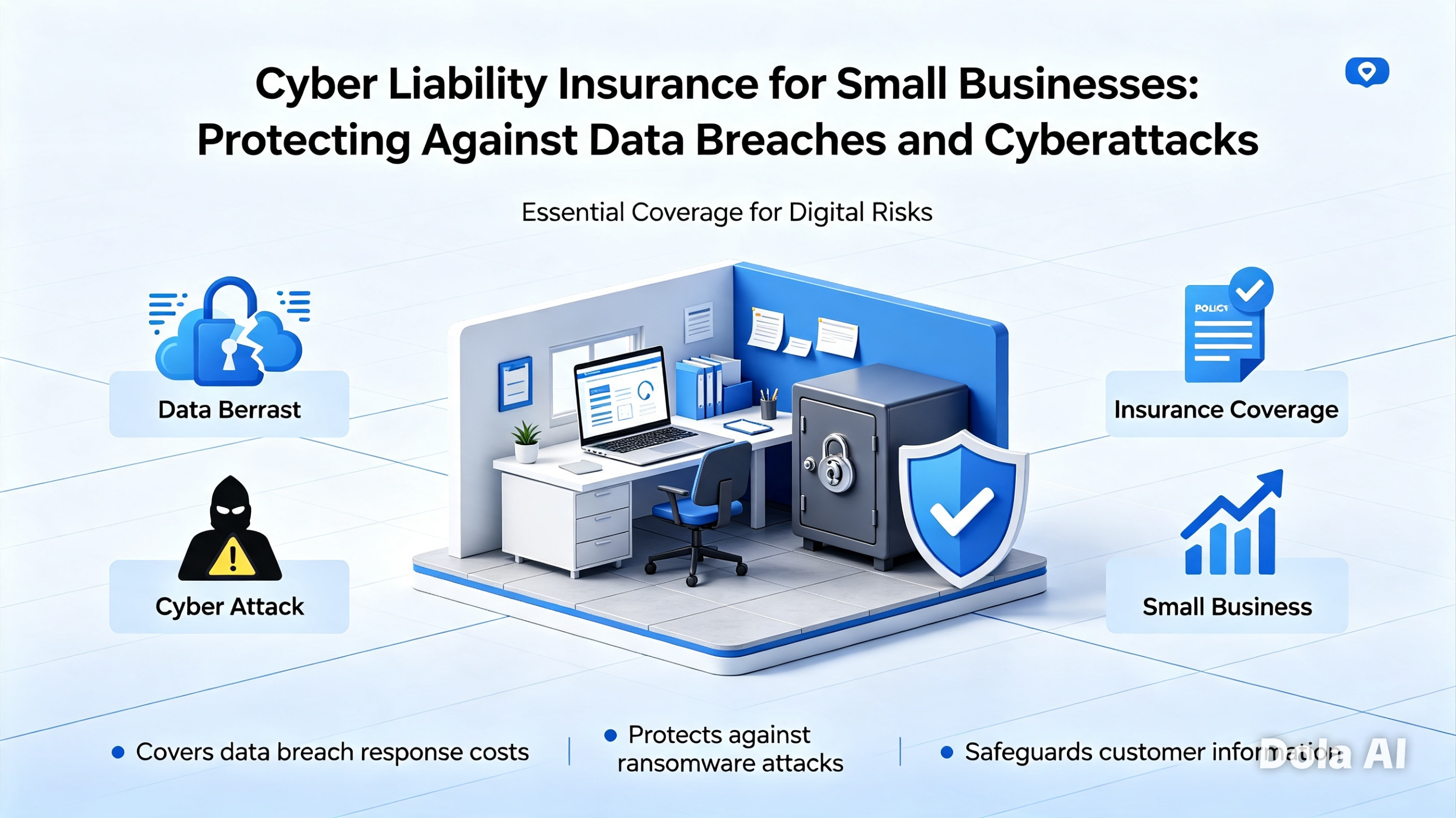
Cyber Liability Insurance for Small Businesses: Protecting Against Data Breaches and Cyberattacks
It's tempting to assume cyberattacks only target large corporations, but small businesses are frequently attractive targets precisely because they tend to have weaker defenses and fewer resources to recover. A single ransomware attack or data breach can cost a small business thousands of dollars in recovery expenses, legal fees, and lost customer trust — which is exactly what cyber liability insurance is designed to address.
What Is Cyber Liability Insurance?
Cyber liability insurance helps businesses cover the financial fallout of cyber incidents, including data breaches, ransomware attacks, and other digital threats. It typically combines two categories of protection: first-party coverage, which pays for your business's own direct losses, and third-party coverage, which handles claims from customers, vendors, or partners affected by the breach.
Unlike general liability insurance, which focuses on physical injury and property damage, cyber insurance is built specifically around the unique risks of storing, processing, and transmitting digital data.
What Does Cyber Liability Insurance Typically Cover?
Data breach response costs — Expenses related to notifying affected customers, offering credit monitoring services, and complying with state and federal breach notification laws.
Ransomware and extortion payments — Costs associated with ransomware attacks, including negotiation assistance and, in some policies, the ransom payment itself.
Business interruption — Lost income if a cyberattack forces your systems offline and halts normal business operations.
Legal and regulatory costs — Defense costs and fines if your business faces a lawsuit or regulatory action following a breach, particularly relevant given data privacy laws that carry steep penalties for non-compliance.
Forensic investigation — The cost of hiring cybersecurity experts to determine how a breach occurred and contain the damage.
Third-party liability — Coverage if a customer or partner sues your business because their data was compromised while in your care.
Who Needs Cyber Liability Insurance?
Any business that stores customer data — names, emails, payment information, health records, or login credentials — is a candidate for this coverage. That includes:
- E-commerce businesses processing customer payment information
- Healthcare providers handling sensitive patient records
- Professional service firms (law, accounting, consulting) storing confidential client data
- SaaS and tech companies managing user accounts and data infrastructure
- Retailers with point-of-sale systems that process card payments
Even businesses that don't consider themselves "tech companies" are exposed. A local retail shop using a cloud-based payment system or a consulting firm emailing client contracts both carry meaningful cyber risk.
How Much Does Cyber Liability Insurance Cost?
Premiums for small businesses generally range from $50 to $200 per month, though costs can climb significantly for businesses handling large volumes of sensitive data or operating in high-risk industries like healthcare or finance.
Factors that influence pricing include:
- Volume and sensitivity of data stored — More records, and more sensitive data types, increase potential breach costs
- Industry — Healthcare, financial services, and e-commerce typically face higher premiums due to regulatory exposure and attacker interest
- Existing security measures — Businesses with strong practices (multi-factor authentication, encryption, regular backups, employee training) often qualify for lower rates
- Revenue and company size — Larger operations generally have more data and higher potential exposure
- Claims history — A previous breach can significantly raise future premiums
Common Gaps Business Owners Overlook
"My general liability policy covers this." It doesn't. Most general liability and property policies specifically exclude cyber-related losses, which is why cyber insurance exists as a standalone or add-on policy.
"We're too small to be a target." Small businesses are often targeted precisely because attackers assume weaker defenses, and a breach doesn't need to be large-scale to be financially devastating for a small operation.
"We use cloud services, so the provider is liable." Most cloud service agreements limit the provider's liability and place responsibility for data protection and breach response on the business using the service.
How to Choose the Right Policy
- Audit what data you actually store, including customer records, payment details, and employee information.
- Review your existing security practices, since insurers often require baseline protections like MFA and regular backups before issuing a policy.
- Check industry-specific requirements, particularly in healthcare or finance, where regulatory penalties can be steep.
- Compare first-party and third-party coverage limits to make sure both your direct costs and customer claims are adequately covered.
- Ask about incident response support, since many insurers provide access to breach coaches, forensic investigators, and PR support as part of the policy.
The Bottom Line
As more small businesses rely on digital tools, cloud storage, and online payment systems, cyber liability insurance has shifted from a "nice to have" to a core part of a responsible risk management strategy. The cost of a policy is typically a fraction of what a single data breach or ransomware incident could cost in recovery expenses, legal fees, and lost customer trust.
Comentarios (1)
hi