 Insurance Guides
Business Insurance Requirements: What Coverage Does Your Business Need in 2026?
Business Insurance Requirements: What Coverage Does Your Business Need in 2026?
Starting a business requires more than choosing a name, finding customers, and creating products or services. Entrepreneurs must also understand the legal and financial responsibilities involved in operating a company. One of the most important responsibilities is having the appropriate business insurance coverage.
Business insurance requirements vary depending on the industry, location, number of employees, and type of operations. While some insurance policies are legally required, others are strongly recommended because they protect the company from serious financial risks.
Understanding which insurance policies your business needs can help you avoid legal problems, protect your assets, and operate with greater confidence.
What Are Business Insurance Requirements?
Business insurance requirements are the minimum insurance protections that a company may need based on laws, contracts, industry standards, or business risks.
Some requirements are mandatory, while others are optional but highly beneficial.
Common required or recommended business insurance policies include:
- Workers' compensation insurance
- Commercial auto insurance
- General liability insurance
- Professional liability insurance
- Commercial property insurance
- Cyber liability insurance
The exact requirements depend on the specific circumstances of each business.
Is Business Insurance Legally Required?
The answer depends on several factors, including where your business operates and what type of work you perform.
Some businesses are required to carry certain insurance policies, especially when they:
- Have employees
- Use commercial vehicles
- Work on government contracts
- Operate in regulated industries
- Lease commercial property
Even when insurance is not legally required, many businesses choose coverage because it protects against unexpected financial losses.
Workers' Compensation Insurance Requirements
Workers' compensation insurance is one of the most common required business insurance policies.
It provides protection when employees suffer workplace injuries or illnesses.
Coverage may include:
- Medical expenses
- Lost wages
- Rehabilitation costs
- Disability benefits
Many locations require businesses with employees to carry workers' compensation insurance.
Businesses should check local regulations to determine when coverage becomes mandatory.
Commercial Auto Insurance Requirements
Businesses that use vehicles for work purposes often need commercial auto insurance.
Personal auto insurance policies usually do not provide sufficient protection for business activities.
Commercial auto insurance can cover:
- Company vehicles
- Delivery trucks
- Service vans
- Employee drivers
It may include protection for:
- Vehicle damage
- Liability claims
- Medical expenses
- Theft
Companies using vehicles for deliveries, transportation, or services should carefully review their insurance requirements.
General Liability Insurance Requirements
General liability insurance is not always legally required, but many businesses carry it because it provides essential protection.
It covers claims involving:
- Customer injuries
- Property damage
- Advertising disputes
- Legal defense expenses
Many landlords, clients, and business partners require proof of general liability insurance before signing agreements.
For many small businesses, this coverage has become a practical requirement for operating successfully.
Professional Liability Insurance Requirements
Professional liability insurance may be required for businesses that provide specialized services.
It protects against claims involving:
- Professional mistakes
- Negligence allegations
- Incorrect advice
- Service failures
Industries that may require or strongly recommend this coverage include:
- Accounting
- Consulting
- Engineering
- Legal services
- Technology services
- Financial advising
Some professional organizations require members to maintain liability coverage.
Commercial Property Insurance Requirements
Commercial property insurance protects business assets such as:
- Buildings
- Equipment
- Inventory
- Furniture
- Technology
While it may not always be legally required, lenders and landlords often require businesses to have property insurance.
For companies with valuable physical assets, this coverage provides important financial protection.
Cyber Insurance Requirements for Modern Businesses
Cyber insurance is becoming increasingly important as companies depend more on technology.
Businesses may need cyber protection if they:
- Store customer information
- Process online payments
- Operate websites
- Use digital systems
- Manage sensitive data
Cyber insurance can help cover:
- Data breach expenses
- Cyberattack recovery
- Legal costs
- Customer notification expenses
Many modern businesses consider cyber insurance an essential part of their risk management strategy.
Business Insurance Requirements by Industry
Different industries have different insurance needs.
Retail Businesses
Common coverage:
- General liability insurance
- Commercial property insurance
- Inventory protection
- Workers' compensation
Restaurants
Common coverage:
- General liability
- Property insurance
- Food liability coverage
- Workers' compensation
- Commercial auto (if delivering)
Construction Companies
Common coverage:
- General liability
- Workers' compensation
- Commercial auto
- Equipment insurance
- Contractor insurance
Consulting Businesses
Common coverage:
- Professional liability
- General liability
- Cyber insurance
- Business property coverage
Contract-Based Insurance Requirements
Many businesses need insurance because of contract obligations.
Clients and partners may require companies to provide:
- Proof of insurance
- Minimum liability limits
- Additional insured coverage
- Specific policy types
This is common in industries such as:
- Construction
- Technology
- Consulting
- Government contracting
Having the required insurance can help businesses win more opportunities.
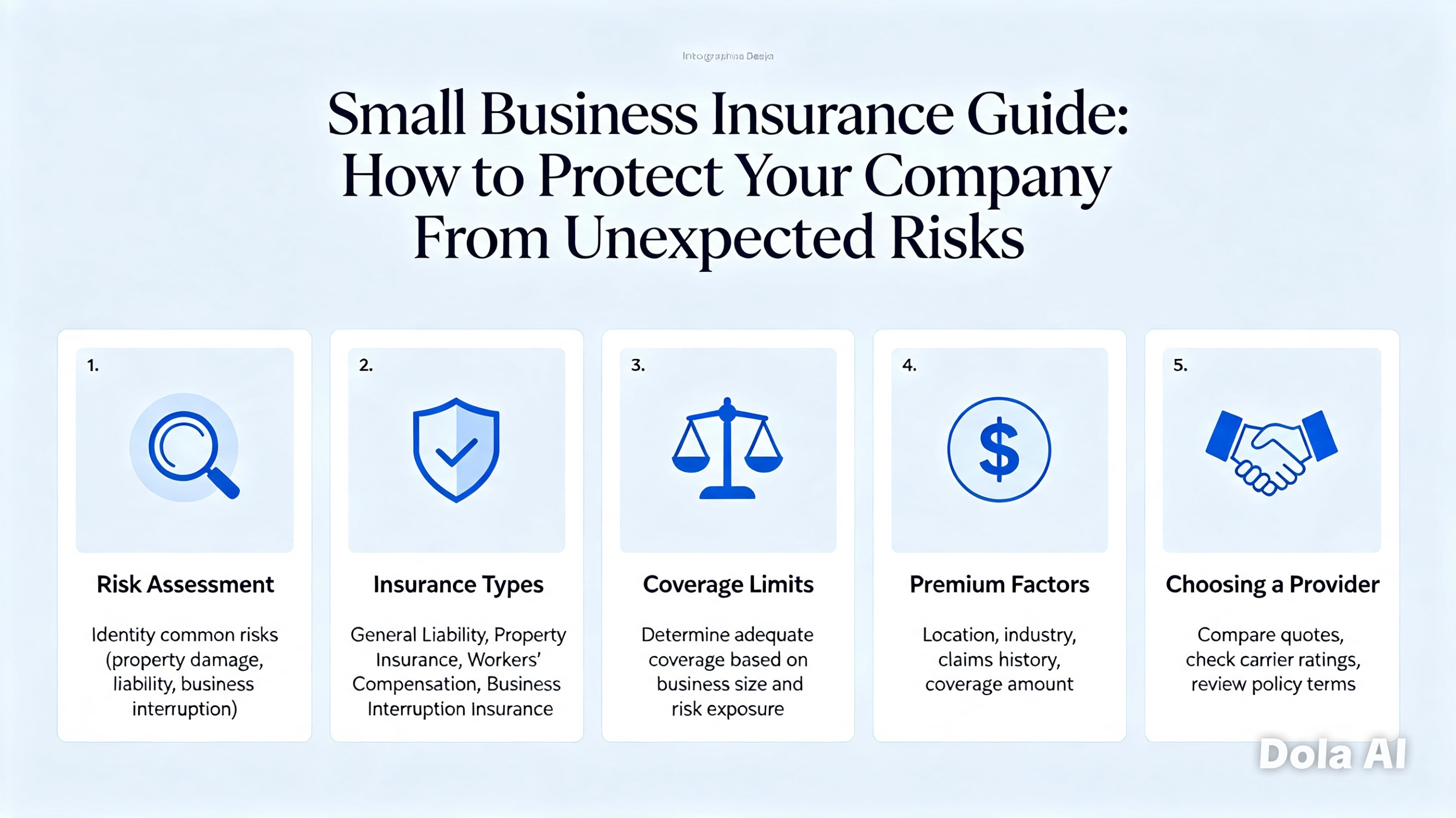
How to Determine Your Business Insurance Needs
Business owners should evaluate several factors.
Consider Your Industry
Different industries face different risks.
A construction company requires different protection than an online consulting business.
Evaluate Your Assets
Consider:
- Equipment value
- Inventory
- Buildings
- Vehicles
- Digital assets
Review Your Employees
More employees can increase workplace risks and insurance requirements.
Understand Customer Risks
Businesses that interact with customers frequently may need stronger liability protection.
How Much Does Required Business Insurance Cost?
The cost of business insurance depends on:
- Type of coverage
- Industry
- Business size
- Location
- Number of employees
- Coverage limits
Small businesses may pay hundreds or thousands of dollars per year depending on their risk profile.
Choosing the right coverage helps avoid paying for unnecessary protection while maintaining adequate security.
Tips for Managing Business Insurance Requirements
Businesses can stay prepared by:
- Reviewing policies annually
- Keeping certificates of insurance updated
- Understanding contract requirements
- Comparing insurance providers
- Maintaining workplace safety
- Documenting business operations
Regular insurance reviews help companies avoid coverage gaps.
Common Mistakes With Business Insurance Requirements
Assuming Insurance Is Optional
Some businesses ignore insurance until a problem occurs.
Buying Insufficient Coverage
Low coverage limits may leave the company financially exposed.
Forgetting Contract Requirements
Missing required insurance can cause businesses to lose opportunities.
Not Updating Insurance After Growth
Adding employees, vehicles, equipment, or locations can change insurance needs.
Frequently Asked Questions
What business insurance is usually required?
Workers' compensation and commercial auto insurance are commonly required in many situations, but requirements vary by location.
Do small businesses need insurance?
Yes. Even small companies face risks that can create significant financial losses.
Can insurance requirements change over time?
Yes. Business growth, new regulations, and contract changes can affect insurance requirements.
How do I know what insurance my business needs?
Review your industry risks, legal obligations, assets, employees, and customer relationships.
The Bottom Line
Understanding business insurance requirements is essential for protecting your company's future. Some policies may be legally required, while others provide valuable protection against financial risks that every business faces.
By identifying your obligations, evaluating your risks, and choosing the right insurance coverage, your business can operate more securely and be better prepared for unexpected challenges.
Comentarios (0)
Sé el primero en comentar.