 Insurance Guides
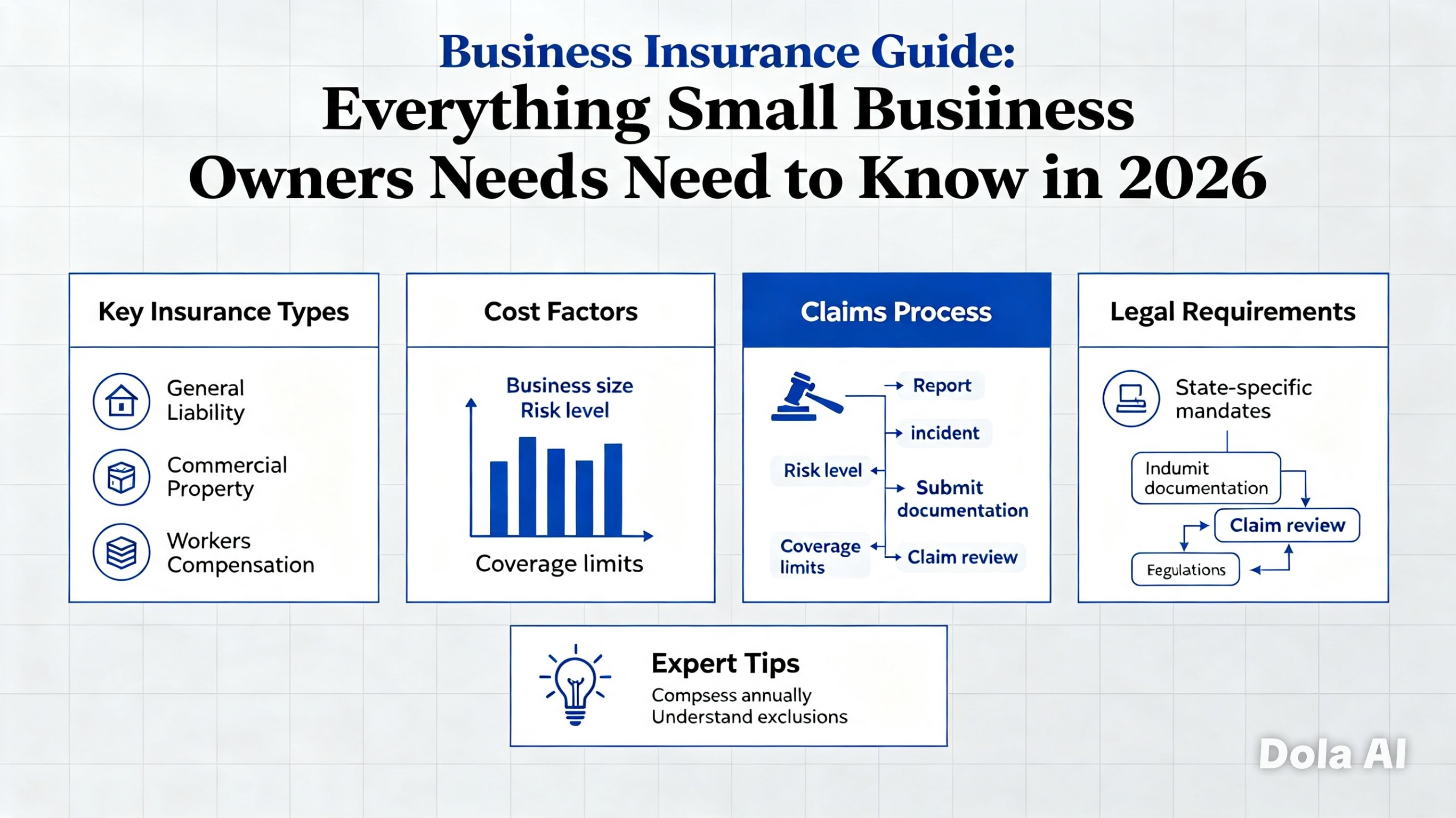
Business Insurance Guide: Everything Small Business Owners Need to Know in 2026
Starting and managing a business requires careful planning. Entrepreneurs focus on customers, sales, employees, and growth strategies, but protecting the company from unexpected risks is equally important.
Business insurance is one of the most important tools available to protect a company's financial stability. Accidents, lawsuits, property damage, cyberattacks, and unexpected interruptions can create significant expenses that affect daily operations.
This business insurance guide explains the basics of commercial insurance, the different types of coverage available, how much insurance costs, and how business owners can choose the right protection for their companies.
What Is Business Insurance?
Business insurance is a group of insurance policies designed to protect companies from financial losses caused by unexpected events.
Instead of paying large expenses directly after an accident or disaster, businesses pay regular insurance premiums to transfer certain risks to an insurance provider.
Business insurance can protect:
- Company property
- Equipment
- Employees
- Customers
- Business vehicles
- Professional services
- Business income
The specific coverage a company needs depends on its industry, size, location, and operations.
Why Is Business Insurance Important?
Every business faces risks, regardless of size or industry.
A small business may experience:
- A customer injury
- Theft of equipment
- Property damage
- A lawsuit
- Employee workplace accidents
- Data security problems
Without insurance protection, these events could create serious financial problems.
Business insurance helps companies:
- Protect their assets
- Continue operations after losses
- Meet contract requirements
- Build customer confidence
- Reduce financial uncertainty
For many businesses, insurance is not just an expense but an essential investment.
Main Types of Business Insurance
Understanding different insurance policies helps business owners choose the right protection.
General Liability Insurance Guide
General liability insurance is one of the most common business insurance policies.
It protects companies from claims involving:
- Customer injuries
- Property damage
- Advertising disputes
- Legal defense costs
Example:
A customer visits a store, falls, and suffers an injury. General liability insurance may help cover medical expenses and legal costs.
Many businesses purchase this coverage because it protects against common everyday risks.
Commercial Property Insurance Guide
Commercial property insurance protects physical business assets.
Coverage may include:
- Buildings
- Equipment
- Furniture
- Inventory
- Computers
- Tools
It may provide protection against:
- Fire damage
- Theft
- Storm damage
- Vandalism
Businesses with physical locations or valuable equipment often consider this coverage essential.
Business Owner's Policy (BOP) Guide
A Business Owner's Policy combines several types of coverage into one package.
Typically, a BOP includes:
- General liability insurance
- Commercial property insurance
- Business interruption coverage
This option is popular among small businesses because it provides broad protection at a lower cost than purchasing separate policies.
Professional Liability Insurance Guide
Professional liability insurance protects businesses that provide advice, expertise, or professional services.
It covers claims related to:
- Errors
- Mistakes
- Negligence allegations
- Client financial losses
Common industries requiring professional liability insurance include:
- Consultants
- Accountants
- Software developers
- Marketing agencies
- Designers
- Financial advisors
Workers' Compensation Insurance Guide
Workers' compensation insurance protects employees who experience workplace injuries.
It can help cover:
- Medical treatment
- Lost wages
- Rehabilitation
- Disability benefits
Businesses with employees may be required to carry workers' compensation depending on local laws.
Cyber Insurance Guide
Technology has changed the way businesses operate, but it has also created new risks.
Cyber insurance helps protect companies from:
- Data breaches
- Cyberattacks
- Ransomware
- Customer information theft
Businesses that collect customer data or operate online should consider cyber protection.
How Much Does Business Insurance Cost?
Business insurance costs vary depending on several factors.
The average small business may spend hundreds to thousands of dollars per year depending on its coverage needs.
Insurance companies consider:
- Industry type
- Business size
- Number of employees
- Revenue
- Location
- Claims history
- Coverage limits
- Risk level
A low-risk consulting company may pay significantly less than a construction company with employees and heavy equipment.
How to Choose the Right Business Insurance
Choosing insurance requires understanding your company's risks.
Follow these steps:
1. Identify Your Business Risks
Consider:
- What assets need protection?
- Do customers visit your location?
- Do employees face workplace hazards?
- Do you provide professional advice?
- Do you store customer information?
2. Select Necessary Coverage
Not every business needs every policy.
Common combinations include:
Small retail business:
- General liability
- Property insurance
- Business interruption coverage
Consulting business:
- Professional liability
- General liability
- Cyber insurance
Construction company:
- General liability
- Workers' compensation
- Commercial auto
- Equipment coverage
3. Compare Insurance Providers
Always compare multiple companies before purchasing.
Evaluate:
- Price
- Coverage limits
- Deductibles
- Customer service
- Claims handling
The cheapest policy is not always the best option.
How to Reduce Business Insurance Costs
Business owners can lower insurance expenses by following good risk management practices.
Strategies include:
- Comparing insurance quotes
- Bundling policies
- Improving workplace safety
- Installing security systems
- Maintaining equipment
- Reducing claims
- Reviewing policies annually
Small improvements can create significant savings over time.
Common Business Insurance Mistakes
Choosing the Cheapest Policy
A low-cost policy may not provide enough protection when a major claim occurs.
Not Updating Coverage
Business needs change over time. New employees, equipment, services, or locations may require additional insurance.
Ignoring Cyber Risks
Many businesses focus only on physical risks and forget about online threats.
Not Reading Policy Exclusions
Understanding what is not covered is just as important as knowing what is included.
Business Insurance Checklist
Before purchasing insurance, review this checklist:
✅ Identify business risks
✅ Evaluate company assets
✅ Determine required coverage
✅ Compare multiple insurance companies
✅ Review deductibles and limits
✅ Check policy exclusions
✅ Update insurance regularly
Frequently Asked Questions
What business insurance should every company have?
Most businesses should consider general liability insurance, but additional coverage depends on industry and operations.
Is business insurance expensive?
Costs vary. Small businesses can often find affordable options by comparing providers and choosing suitable coverage.
Can startups get business insurance?
Yes. Many insurers offer policies designed specifically for startups and small businesses.
How often should I review my business insurance?
Most businesses should review their insurance policies at least once a year or whenever major changes occur.
The Bottom Line
Business insurance is a foundation for long-term company protection. Understanding different insurance types, costs, and coverage options allows entrepreneurs to make better decisions and reduce financial risks.
A strong insurance strategy helps businesses recover from unexpected events, protect their assets, and continue growing with greater confidence. By following this business insurance guide, companies can build a safer and more resilient future.
Comentarios (4)
how to work
what is your word?
work?
fine